
What Is Direct-to-Garment (DTG) Printing?
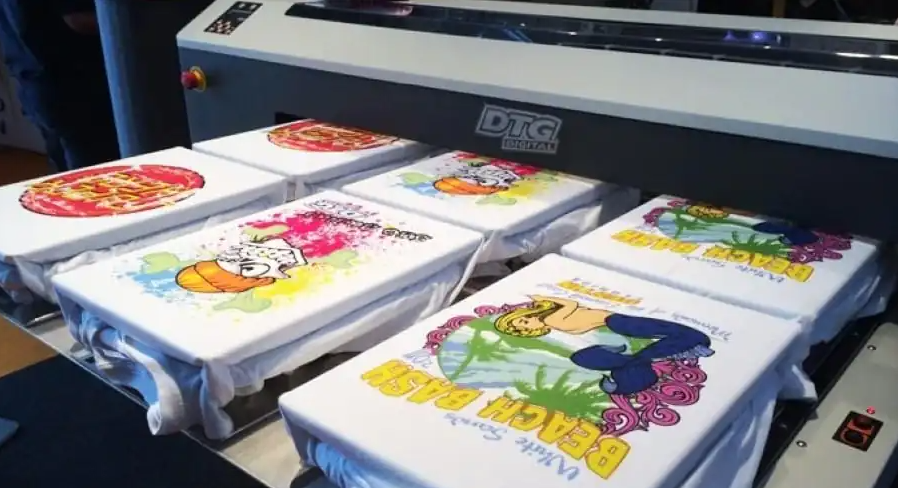
Direct-to-Garment (DTG) Printing
What Is Direct-to-Garment (DTG) Printing?
Direct-to-Garment (DTG) printing is a digital apparel printing technology that uses specialized inkjet printers to apply designs directly onto fabric. This method allows for high-resolution, full-color prints on garments such as T-shirts, hoodies, tote bags, and more.
Unlike traditional methods, DTG printing eliminates the need for screens or transfer films. Instead, designs are printed directly from a digital file, making it one of the most efficient solutions for custom apparel and print-on-demand businesses.
DTG printing is a process where inkjet technology prints designs directly onto fabric, enabling high-quality, full-color images without the need for screen setup.
How Does DTG Printing Work?
The DTG printing process involves several precise steps to ensure print quality and durability:
1. Garment Preparation
A blank garment is placed on a platen to keep the surface flat and wrinkle-free during printing.
2. Image Processing (RIP Software)
The design file is processed using RIP software, which controls color output, ink distribution, and white ink layering.
3. Printing
Inkjet printheads apply water-based textile inks directly onto the fabric. For dark garments, a white ink underbase is printed first.
4. Curing
The printed garment is heat-cured using a heat press or conveyor dryer to fix the ink permanently into the fibers.

Types of DTG Printers
Entry-Level DTG Printers
- Compact and easy to operate
- Suitable for startups and small businesses
- Limited to light garments and smaller print areas
Commercial DTG Printers
- Higher speed and print resolution
- Capable of printing on dark fabrics with white ink
- Ideal for print shops and mid-volume production
Industrial DTG Printers
- High-speed production (10–30 seconds per shirt)
- Multi-platen systems and bulk ink supply
- Designed for large-scale manufacturing
What Fabrics Can DTG Print On?
DTG printing works best on cotton-based fabrics due to superior ink absorption.
Compatible materials include:
- 100% cotton
- Cotton blends (≥50% cotton)
- Pretreated polyester (in some advanced systems)
⚠️ Synthetic fabrics without proper treatment may result in poor print quality.
DTG Ink Technology
DTG printers use water-based pigment inks designed for textiles. These inks provide:
- Soft hand feel (no heavy coating)
- High color vibrancy
- Wash durability
- Eco-friendly performance
Ink configurations:
- Entry-level: CMYK only
- Commercial: CMYK + White
- Industrial: CMYK + White + Extended colors
Why Pretreatment Is Important in DTG Printing
Pretreatment is essential when printing on dark garments or using white ink.
Benefits of pretreatment:
- Improves ink adhesion
- Prevents color bleeding
- Enhances brightness and detail
- Ensures proper curing
Pretreatment can be applied manually or with automated machines in high-volume production environments.
DTG Printing vs Screen Printing
| Feature | DTG Printing | Screen Printing |
|---|---|---|
| Setup Cost | None | High (screen preparation) |
| Best For | Small runs, custom designs | Bulk orders |
| Color Capability | Unlimited colors | Limited per setup |
| Fabric Feel | Soft | Slightly thicker |
| Cost per Unit | ثابت | Decreases with volume |
👉 Key Insight:
DTG printing is ideal for on-demand and small-batch production, while screen printing remains more cost-effective for large-volume orders.
Related blog: DTF VS SCREEN PRINTING
Advantages of DTG Printing
- No minimum order quantity
- High-detail, photographic-quality prints
- Fast turnaround time
- Easy customization (names, numbers, designs)
- Reduced waste and inventory
Limitations of DTG Printing
- Higher ink cost compared to screen printing
- Slower production speed (except industrial systems)
- Limited fabric compatibility
- Requires pretreatment for dark garments
DTG Printing Cost Breakdown
DTG printing costs typically include:
- Ink consumption
- Pretreatment solution
- Garment cost
- Labor and equipment
💡 Important:
Unlike screen printing, DTG cost per shirt remains consistent whether you print 1 or 500 units—making it ideal for small orders.

Applications of DTG Printing
DTG printing is widely used in:
- Custom T-shirt businesses
- Print-on-demand eCommerce (Shopify, Etsy)
- Promotional products
- Corporate branding
- Personalized gifts
Future Trends in DTG Printing
Advancements in DTG technology continue to improve:
- Printing speed and efficiency
- Ink performance and sustainability
- Automation and workflow integration
- Fabric compatibility
DTG is becoming increasingly competitive for medium-volume production, especially with the rise of on-demand manufacturing.
FAQ
What is DTG printing best used for?
DTG printing is best for small orders, custom designs, and full-color prints with high detail.
How long do DTG prints last?
With proper curing and care, DTG prints can last 50+ washes without significant fading.
Is DTG printing expensive?
DTG has higher per-unit costs than screen printing but is more cost-effective for low-volume orders.
Can DTG print on polyester?
Most DTG printers work best on cotton, but some advanced systems support polyester with pretreatment.
Do you need pretreatment for DTG printing?
Yes, especially for dark garments and designs using white ink.
Conversion Section
Start Your DTG Printing Business Today
Whether you are launching a custom apparel brand or upgrading your print shop, DTG printing offers unmatched flexibility, scalability, and design freedom.
👉 Invest in DTG technology to unlock:
- On-demand production
- Zero inventory risk
- High-margin custom products
Ultimate Guide to Screen Printing Frames: Static vs Retensionable
What Is Backlit Film Printing?
Related Article


