
DTF VS SCREEN PRINTING
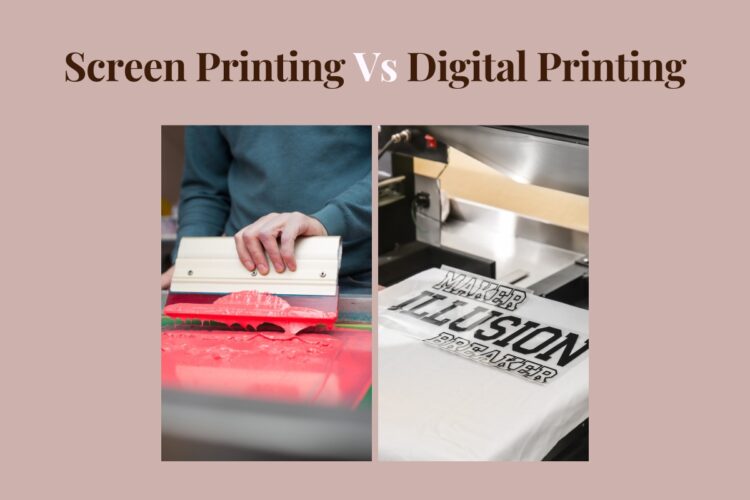
which is more suitable for cloth printing?
In the field of custom-made clothing, printing technology plays a crucial role. Today, we will discuss deeply two of the most popular printing methods for custom clothing: DTF and screen printing. Whether you are looking for the perfect printing technology for a clothing brand or simply curious about the best way to customize clothing, please keep reading. We will analyze the advantages and disadvantages of each method in detail and share which suits your needs.
DTF printing is also called Direct-to-Film printing, which is a printing technology that transfers soft and cool designs to clothes and other fabrics. In this printing technology, we should print the design on the DTF film firstly, and then use a heat press machine to imprint the patterned film onto fabric or other substrates. During the embossing process, the powder adhesive on the back of the film ensures that the pattern is firmly adhered to the fabric. Finally, remove the film and the pattern will be perfectly attached to the fabric.
The key advantage of DTF lies in its applicability to a wider range of fabric types, including cotton, polyester blends and even nylon. The patterns printed by DTF are durable and colorful, making them highly suitable for designs that need to be presented on dark fabrics. In addition, you can also do batch printing.
Thanks to the adoption of digital printing technology, DTF can print out very fine and clear patterns, with bright and rich colors and excellent visual effects. DTF printing has excellent wash-ability and wear resistance. The patterns are not easy to fall off or fade, making it suitable for long-term use and frequent cleaning.

DTF technology can save the pretreatment and drying steps, thereby shortening the production time. In addition, since DTF printing requires less white ink because white ink is usually more expensive, it can reduce costs to a certain extent. And DTF is also more environmentally friendly which owns to its lightweight setup. It generates the least amount of waste and reduces the water volume in post-treatment.
However, DTF technology requires special transfer films and hot melt powders, as well as corresponding printing equipment, so the initial investment may be relatively high. What’s more, it should be noted that DTF prints will show slightly raised textures on clothes because the ink and the glue powder will increase the thickness.
Screen printing, as the oldest and most reliable method for mass-produced custom clothing, has its own screen for each color in the design. Ink is applied to the fabric through a grid, and this technology can produce bright and durable bold prints. Due to the thick and firm ink layer in screen printing, the printed patterns have excellent durability and wear resistance, making it particularly suitable for products that need to be used for a long time.
The ink used in screen printing is usually quite thick, which can achieve a high color saturation. The representation of images and text is more vivid and distinct, making it suitable for designs that need to highlight colors. Screen printing is suitable for large-area patterns or designs, especially performing well in large-sized printing, such as posters, banners, T-shirts, etc. Screen printing is particularly cost-effective and is highly suitable for large orders, making it an excellent choice for brand events or products.

However, screen printing has relatively low flexibility. Screen printing is suitable for relatively simple designs and patterns. Complex gradient colors or very detailed patterns may have problems such as insufficient printing accuracy or blurred details. Besides, every time the design or printing content is changed, the screen template needs to be remade, which makes it less flexible and convenient than DTF printing. Especially when it comes to small-scale production, it may not be cost-effective. For the printing of complex or multi-color patterns, achieving a soft feel like that of DTF may be even more difficult.
Choosing the suitable printing technology all depends on your specific needs. If you need to achieve versatility and bold printing on dark fabrics, DTF is your top choice as it is suitable for various materials and the printing effect is long-lasting, although it does have a slight textured feel. Finally, if you need to print in bulk and hope to obtain bright and durable prints, screen printing is cost-effective for larger order volumes, especially when your design uses fewer colors.
If you want to know more about screen printing & digital printing, please contact at +86 15097355251
Different printing techniques of garment screen printing
Different kinds of screen printing mesh Usage
Related Article


