
The squeegee using and maintenance instructions
2025-05-21

The squeegee using and maintenance instructions
A. The hardness of the squeegee is decided into three categories
1. In generally speaking, the soft squeegee suitable for the low mesh screen cloth, low viscosity ink, irregular surface if the printing. Using the soft squeegee for printing, large amount of ink, printing image fidelity is moderate, is usually uesd for large area printing, ceramics and glass.
2. The medium hardness squeegee is used for high pressure. Suitable for various of mesh screen cloth, various of ink and various of the prints use this kind of squeegee the printing ink accumulate very well. Image redolution power is good, suitable for all kinds of printed substrates.
3. The hard squeegee used for the largest printing pressure and printing ink viscosity is very high. Small amount of oil accumulation and image resolution are usually in the screen printing can choose the hard squeegee. It produces the ink layer is very thin.
B. The grinding of the squeegee
The sides of the squeegee because of frequent friction with the mesh, damage deformation will happen eventually. Grinding scraping machine can be used to make the sides of squeegee become sharp. when we grinding the squeegee, should notice several items:
1. Using a finer grinding wheel, in order to make the squeegee materials in grinding scraping the loss is minimal. Ensure the edge of the scraping clean, not stain, does not melt the rotating speed of grinding wheel, should using low speed.
2. When you need to wear off a large piece of squeegee quickly, can use coarse grinding wheel for grinding. If you only need to glue grinding smooth, use very fine sand paper is ok.
3. When you cut part of the squeegee use the cutting knife and then needs to be polished we must ensure that after cutting the edge of the squeegee clean and no gap.
4. When printing work finish please don't to grind the squeegee immediately. We should wait for 24 hours, after the solvent ink evaporate completely.
5. In addition to make sure the squegee edge straight, make the free height along the entire length of the squeegee direction are consistent.

C. The maintenance storage of the squeegee
1. Shall be flat, don't places into rolls
2. Shall be open the whole roll 24 hours make sure the squeegee complete stretch before using.
3. Storage without removing the handle, the article blowing up, should be used when the stencil scraping the article can't contact with any object.
4. When store the squeegee, the temperature should be 20 to 25 degrees and dry environment, away from the ink, because the squeegee can absorb moisture in the air and solvents.
5. The squeegee with ink or handle can't stored overnight.
6. Do not put the squeegee in the solvent for long time. Although the squeegee can be resistant to many kinds of solvents, but long time of soaking will make the squeegee deformation, loss of elasticity.
7. Shall be immdiately flush after using it to avoid ink dry on the squeegee. After cleaning the rubber handle there won't have any residual ink marks, otherwise when using the squeegee next time will have mark.
8. Use the soft cloth to clean the squeegee, along the direction of the squeegee to clean. Othervise reverse cleaning will damage the squeegee edge.

Above all it is very important to the select and use the squeegee. In the midst of our printing. Undertake choosing according to various substrates with different squeegee. It will have great effect for silk screen printing quality.
If you want to know more details, please contact us at +86 15097355251
Printing and dyeing solutions
Which industry can screen printing mesh using?
Related Article
Start with a one-color design, a screen sized for the artwork, and a spare shirt for test prints. The first print gives you a chance to check placement, edge sharpness, and ink coverage before you load the rest of the batch. Most of those results depend on decisions made before the squeegee touches the fabric.
How to Screen Print T-Shirts in Small Batches

A screen can look clean and still have fingerprints, dust, or residue from the last reclaim. These contaminants can make photo emulsion coat unevenly and contribute to pinholes, weak spots, or missing fine detail after washout. Degreasing removes contamination before you coat the mesh, when it’s still easy to fix.
How to Degrease a Screen for Screen Printing

Start with a single-color chest graphic and a flat area of the hoodie, away from seams and pockets. With a simple design, you can tell whether your screen is ready by looking at three things: the image areas wash out cleanly, a test print transfers the whole design, and the ink cures according to its instructions.
How to Screen Print a Hoodie in One Color
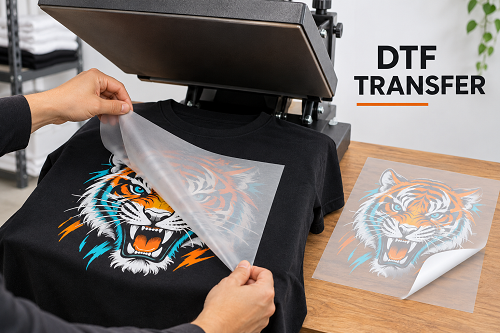
A DTF transfer can look fine when it comes off the heat press and still lift or crack in the wash. If the edges peel, start by checking heat, time, and pressure at the point where the print lifted. If the print cracks while the edges stay down, check how the design stretches with the garment and review how it was washed and dried.
Why Do DTF Transfers Peel or Crack After Washing?