
Introduction of Screen Print
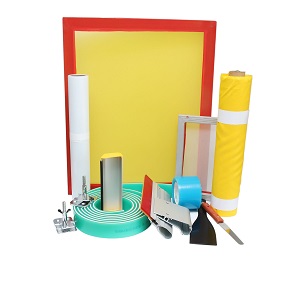
In recent years, individual material technologies in Screen Printing have improved dramatically, which has made it possible to print a line width of 50 micron or less in various fields. Although Screen Printing is well known for superior usability and versatility in the manufacturing process, high Quality Screen Printing in electronics industries must be used under the strictest conditions with optimized materials and settings.
“ENYANG” introduces a number of fundamental principles of Screen Printing as well as more advanced technologies to develop Screen Printing further.
Screen printing is a popular printing technique that utilizes a fine mesh screen as a stencil for ink to be pressed through onto a surface. Screen printing industry. One of the most vital components of screen printing is the screen printing mesh. In essence, silk screen printing mesh is a tightly woven polyester or nylon material that forms the stencil during the screen printing process. The mesh count of screen printing mesh is the number of threads per inch in both the horizontal and vertical directions of the mesh. The higher the thread count, the finer the mesh, resulting in a finer and more detailed print. On the other hand, lower thread count mesh is better suited for printing solid colors. Silk screen printing mesh is the general term used to describe any type of screen printing mesh. While silk is still used as the mesh material, polyester and nylon have become increasingly popular alternatives due to their resistance to humidity and moisture.
A screen printing mesh is pivotal to the overall screen printing process. The proper mesh must be selected based on the design's complexity, color, and substrate. In addition, proper tension and mesh preparation are necessary to achieve the precise print results desired. In conclusion, understanding the essentials of screen printing mesh and its relevant terminologies is crucial for any silk screen printing venture. It is a must-have tool for professionals and beginners alike.

It is better to select the mesh with the highest possible Tensile Strength. It helps other parameters like peel-off velocity, dimensional accuracy, screen life, and so on, thus mesh strength is the most important aspect in printing. It is necessary to pay more attention to the mesh strength when printing narrow lines because the tensile strength of a finer mesh with thinner wires is usually lower. For accurate dimensional screen printing, or when printing with high viscosity paste and have tougher peel-off.
Discharging ink volume fluctuates depending on Screen Mesh opening rate. When the opening rate is too high it often causes bleeding and the printed resolution becomes less clear. We recommend 40% opening rate for fine line printings.
Our advantage:
1. 126 sets P7100 and P7150 Sulzer weaving looms from Switzerland, as well as Germany-made intellectual electronic warping machine can ensure our supply ability to be 5000 meters per day.
2. For normal mesh count mesh and other products, usually we have stocks, goods can be shiped out within 15 days.
3. Our production process fully based on the high computer technology, it is accepted as the only company capable of having TSE ( Chinese Standard Institution ) and ISO 9001:2008. 90% of our silk screen printing mesh exported to Southeast Asia, North America, Europe and other parts in the world. We have good reputation in the world with high quality and competitive price.

Screen Print Manual Tips: Follow These Expert Guidelines for Better Print Quality
DTF Printing--How dtf print on cloth?
Related Article


