
What Are Differential Adhesive Tapes Use For?

What Are Differential Adhesive Tapes Use For?
A Practical Guide to Silicone/Acrylic Differential Tapes
Differential adhesive tapes are double-sided pressure-sensitive tapes engineered with different adhesive systems on each side. They are commonly used when two materials require different bonding characteristics, such as attaching silicone foam to metal, creating removable protection pads, or joining low-surface-energy materials to conventional substrates.
Among the various constructions available, silicone/acrylic differential tapes are one of the most widely used because they combine the extreme temperature resistance and silicone-bonding capability of silicone adhesive with the strong adhesion and versatility of acrylic adhesive.
In this guide, you'll learn:
• What differential adhesive tapes are
• How silicone/acrylic differential tapes work
• The advantages of each adhesive system
• Typical industrial applications
• How to select the right differential tape for your project
Quick Comparison: Silicone vs Acrylic Adhesive
| Property | Silicone Adhesive | Acrylic Adhesive |
|---|---|---|
| Bonds to Silicone Materials | Excellent | Poor |
| Temperature Resistance | Up to 500°F | Moderate |
| Initial Tack | Moderate | High |
| Long-Term Adhesion | Excellent | Excellent |
| UV Resistance | Outstanding | Good |
| Chemical Resistance | Excellent | Good |
| Removability Options | Available | Limited |
| Cost | Higher | Lower |
What Is a Differential Adhesive Tape?
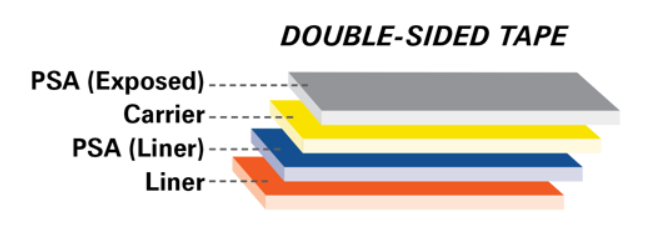
Differential adhesive tape is a specialty PSA tape that uses two different adhesive systems on opposite sides of the carrier. Unlike conventional double-sided tapes, both sides are engineered to perform different functions.
Why Use Different Adhesives?
Many assemblies involve two materials with completely different surface characteristics.
Examples include:
• Silicone foam to steel
• Rubber to aluminum
• Protective foam blocks to painted surfaces
• Electronic components to plastic housings
A single adhesive often cannot provide optimal performance on both surfaces. Differential tape solves this problem by allowing each side to be customized for the substrate it contacts.
How Silicone/Acrylic Differential Tapes Work
A silicone/acrylic differential tape combines:
Side A: Silicone PSA
Side B: Acrylic PSA
The silicone adhesive bonds difficult surfaces, while the acrylic adhesive bonds traditional engineering materials.
This creates a versatile bonding solution capable of joining dissimilar materials that would otherwise require multiple attachment methods.
Benefits of Silicone Adhesive
Silicone adhesive is often the reason engineers choose differential tapes in the first place.
Excellent Bonding to Silicone Materials
Silicone rubber and silicone foam are notoriously difficult to bond using conventional adhesives.
Silicone PSA forms reliable bonds to:
• Silicone foam
• Silicone sponge
• Silicone rubber
• Certain low-surface-energy plastics
This capability makes silicone/acrylic tapes highly valuable in sealing, gasketing, cushioning, and vibration-control applications.
Outstanding Temperature Resistance
Silicone adhesives maintain performance across an exceptionally wide temperature range.
Typical operating range:
-100°F to 500°F
Applications include:
• Battery packs
• Electronics
• Aerospace components
• Automotive engine compartments
• High-temperature industrial equipment
Few adhesive technologies can match this level of thermal stability.
Superior UV Resistance
Outdoor environments expose adhesives to constant ultraviolet radiation.
Over time, UV exposure can weaken many adhesive systems. Silicone adhesives resist UV degradation far better than most alternatives, making them ideal for long-term outdoor use.
Exceptional Chemical Resistance
Many industrial environments involve exposure to:
• Oils
• Fuels
• Solvents
• Cleaning chemicals
Silicone adhesive maintains its performance even when exposed to harsh chemicals, helping extend service life and reduce maintenance requirements.
Moisture Resistance
Silicone PSA performs reliably in humid and wet environments.
Because the adhesive remains stable in the presence of water, it is frequently used in outdoor applications, sealing systems, and moisture-sensitive assemblies.
Repositionable and Removable Options
Certain silicone adhesive formulations can be designed for clean removal.
This allows manufacturers to create:
• Temporary protection pads
• Reusable components
• Removable insulation pieces
• Transport protection systems
without leaving adhesive residue behind.
Benefits of Acrylic Adhesive
While silicone handles difficult surfaces, acrylic adhesive provides the strong permanent bond needed on the opposite side.
Strong Bonding to Common Engineering Materials
Acrylic adhesive bonds effectively to:
• Steel
• Aluminum
• Painted metals
• Plastics
• Foam materials
• Rubber materials
This broad compatibility makes acrylic the ideal counterpart to silicone adhesive.
High Initial Tack
Acrylic adhesives typically offer stronger quick-stick properties than silicone adhesives.
This allows faster assembly and immediate handling during production.
Excellent Long-Term Durability
Acrylic adhesives provide:
• High peel strength
• Strong shear performance
• Long-term aging resistance
• Reliable structural bonding
These properties help ensure a durable bond throughout the product's service life.

Understanding the Carrier Layer
The carrier, also called the backing or substrate, provides structural support for the tape.
Although it does not create the bond itself, it significantly influences overall tape performance.
Important carrier characteristics include:
• Tensile strength
• Temperature resistance
• Conformability
• Die-cutting performance
• Dimensional stability
Common Carrier Materials
Polyester (PET) Film
PET film provides excellent dimensional stability and is widely used in industrial applications.
Polyimide Film
Polyimide offers exceptional heat resistance and electrical insulation performance.
Nonwoven Carriers
Nonwoven materials improve flexibility and conformability, especially on uneven surfaces.
The Role of Release Liners
Release liners protect the adhesive surfaces during manufacturing and transportation.
Before installation, the liner is removed to expose the adhesive.
Why Differential Tapes Require Specialized Liners
Silicone and acrylic adhesives have very different release characteristics.
To address this challenge, manufacturers may use:
Single-Liner Systems
Custom release coatings allow both adhesives to release from one liner.
Double-Liner Systems
Each adhesive receives its own dedicated liner optimized for its chemistry.
Double-liner constructions are especially useful for precision assembly operations.
Common Applications of Silicone/Acrylic Differential Tapes
These tapes are used throughout numerous industries.
Automotive Industry
Applications include:
• Silicone foam gaskets
• Vibration damping components
• Removable protection pads
• Interior sealing systems
Electronics Industry
Applications include:
• Thermal insulation
• Battery pack assembly
• EMI shielding
• Component mounting
Aerospace Industry
Applications include:
• Lightweight sealing systems
• High-temperature insulation
• Composite material bonding
Industrial Manufacturing
Applications include:
• Equipment sealing
• Protective packaging systems
• Temporary assembly fixtures
• Custom die-cut components
Other Types of Differential Adhesive Tapes
Although silicone/acrylic constructions are highly popular, other differential configurations are also available.
Rubber/Acrylic Differential Tape
This design combines:
• High initial tack from rubber adhesive
• Long-term durability from acrylic adhesive
Ideal for fast assembly applications.
Acrylic/Acrylic Differential Tape
Different acrylic formulations or coating weights are used on each side to optimize adhesion for specific substrates.
How to Choose the Right Differential Tape
Before selecting a tape, consider:
Surface Type
Determine whether the substrates are:
• Silicone
• Metal
• Plastic
• Foam
• Rubber
Environmental Conditions
Evaluate:
• Temperature
• Moisture
• UV exposure
• Chemical exposure
Bonding Requirements
Decide whether the application requires:
• Permanent attachment
• Removable bonding
• Repositionability
Manufacturing Process
Consider:
• Manual application
• Automated assembly
• Die-cut requirements
• Production speed
Conclusion
Silicone/acrylic differential adhesive tapes provide a unique solution for bonding dissimilar materials that traditional double-sided tapes often cannot handle effectively.
By combining the difficult-surface bonding capability and environmental resistance of silicone adhesive with the strong adhesion and versatility of acrylic adhesive, these tapes enable manufacturers to solve complex assembly challenges while improving reliability and simplifying production.
Whether the goal is bonding silicone foam to metal, creating removable protective components, or improving performance in high-temperature environments, silicone/acrylic differential tapes remain one of the most effective and versatile bonding solutions available today.
Solar Squeegee: The Essential Tool for High-Precision Solar Cell Screen Printing
What is nano tape used for?
Related Article


