
Typical Application Scenarios of Screen Printing Advantages
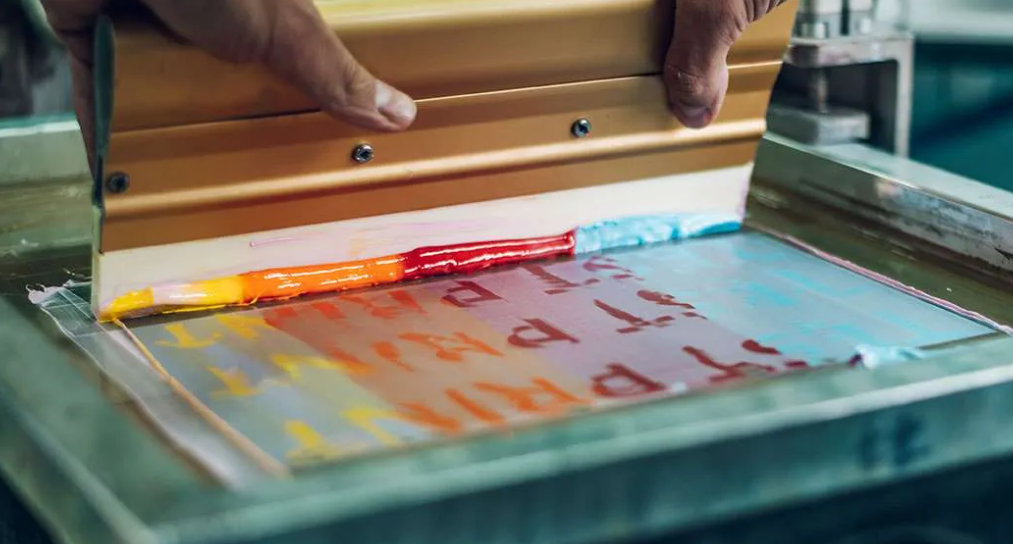
Typical Application Scenarios of Screen Printing Advantages
Endowed with unique technological characteristics, screen printing demonstrates irreplaceable value across multiple fields. In the following scenarios, its core advantages are particularly prominent, making it a preferred solution that outperforms many other printing technologies in terms of flexibility, durability, and expressive power.
1. Small-Batch and Customized Production
One of the most notable strengths of screen printing lies in its excellent adaptability to small-batch and personalized customization needs, which perfectly caters to the rising demand for individualized products in the current market. It enables rapid response to customer requirements without the burden of high plate-making costs, thus gaining wide popularity in the customized product sector.
Custom Apparel and Textiles
Screen printing is widely applied in the pattern printing of personalized apparel such as T-shirts, hoodies, and canvas bags. It supports single-piece or small-batch orders, eliminating the need for expensive plate-making fees that are usually required in large-scale production. This advantage allows brands and small businesses to quickly launch limited-edition or customer-specific designs, effectively meeting the diversified and personalized market demands. Whether it is a unique pattern for a personal wardrobe or a customized design for a small group activity, screen printing can deliver high-quality results with cost-effectiveness.
Promotional Items and Gift Customization
For small items customized by enterprises, such as mugs, notebooks, and keychains, screen printing provides a low-cost and highly flexible solution for branding or personalized design. Enterprises often use screen printing to print their logos, slogans, or event themes on these promotional items and gifts. Compared with other printing methods, screen printing offers lower production costs for small batches, ensuring that enterprises can achieve effective brand promotion without excessive investment. Meanwhile, the printed patterns and texts have good adhesion and durability, maintaining a clear and intact appearance even after long-term use, which enhances the practicality and commemorative value of the gifts.

2. Industrial and Functional Printing
In the industrial field, printing often bears functional attributes, requiring high precision, durability, and stability. Screen printing excels in this regard, being capable of meeting the strict technical requirements of industrial production and becoming an indispensable part of functional printing.
Electronic Component Marking
In the electronic industry, screen printing plays a crucial role in the marking of electronic components. It is used for printing conductive inks on printed circuit boards (PCBs) and high-temperature-resistant marks on electronic components. Screen printing can achieve micron-level line width accuracy, ensuring the normal operation of electronic components. Moreover, the printed patterns have excellent chemical stability, being able to resist corrosion from various chemical substances in the working environment, thus guaranteeing the reliability and service life of electronic products.
3. Outdoor and Durability-Demanding Scenarios
Outdoor products need to withstand harsh natural environments such as ultraviolet radiation, rain, and wind erosion, so their printing quality is subject to strict durability requirements. Screen printing, with its excellent weather resistance, can fully meet these needs.
Outdoor Advertising and Signage
Outdoor advertising such as light box advertisements, road signs, and car stickers needs to be exposed to the natural environment for a long time. Screen printing uses UV inks or solvent-based inks, which can resist ultraviolet radiation and rain erosion, with a service life of 3 to 5 years. Compared with other printing methods, the patterns printed by screen printing have better color retention, not easy to fade or peel off. This ensures that outdoor advertising can maintain a good visual effect for a long time, maximizing the advertising benefit.
4. Special Materials and Irregular Substrates
Unlike traditional printing technologies that are limited to flat and regular substrates, screen printing can adapt to a variety of special materials and irregular substrates, expanding the application scope of printing.
Curved and Irregular Printing
For curved or irregular objects such as wine bottles, cosmetic bottles, and balls, screen printing can achieve uniform ink coverage through flexible screens and squeegee pressure, without seams or deformation. This solves the printing problem of irregular objects that are difficult to handle by other printing methods. For example, the patterns and logos on the surface of wine bottles and cosmetic bottles printed by screen printing are smooth and uniform, enhancing the product's grade and aesthetic appeal.
Thick Plates and Rigid Materials
For acrylic display stands, wooden crafts, ceramic products, and other rigid materials, screen printing can achieve high adhesion and three-dimensional effects through its thick ink layer and embossing process. The thick ink layer makes the printed patterns have a strong sense of three-dimensionality and touch, improving the texture of the products. At the same time, the ink has good adhesion to rigid materials, ensuring that the patterns do not fall off easily even after long-term use.
5. High-End Packaging and Art Reproductions
In high-end packaging and art creation fields, screen printing is favored for its high color saturation and excellent expressive power, being able to create unique visual and tactile experiences.
Luxury Goods and High-End Packaging
Cosmetic boxes, wine boxes, cigarette boxes, and other high-end packaging require high color saturation and tactile experience. Screen printing uses pearlescent, metallic, and tactile inks to create a luxurious texture. Pearlescent inks make the packaging surface show a charming luster, metallic inks add a sense of nobility, and tactile inks provide a unique touch feeling. These special effects enhance the added value of high-end products and help brands establish a high-end image.
Art Prints and Limited Editions
Artists use screen printing to achieve multi-color overprinting and manual color mixing. Each work retains unique brushstrokes, having both artistic value and collection significance. Screen printing allows artists to accurately reproduce their works, and the thick ink layer and rich color expression make the prints have a strong artistic appeal. Many limited-edition art prints are produced by screen printing, which are highly sought after by art collectors.
6. Functional Coatings and Special Effects
With the development of printing technology, screen printing is also widely used in the field of functional coatings and special effects, providing more possibilities for product innovation.
Anti-Counterfeiting and Security Printing
Anti-counterfeiting technologies such as temperature-sensitive inks, UV invisible inks, and microtext can be accurately implemented through screen printing. Screen printing can precisely control the details of patterns, making anti-counterfeiting marks difficult to copy. Temperature-sensitive inks change color with temperature changes, UV invisible inks can only be visible under UV light, and microtext is difficult to distinguish with the naked eye. These anti-counterfeiting technologies effectively improve the security of products and prevent counterfeiting.

Optical and Tactile Effects
Processes such as 3D three-dimensional printing, frosted touch, and local varnish can be achieved through screen printing, enhancing the interactivity and brand recognition of products. 3D three-dimensional printing creates a strong three-dimensional sense, making products more attractive; frosted touch provides a comfortable hand feel, improving the user experience; local varnish makes specific parts of the product surface shiny, highlighting key information or patterns. These special effects make products stand out in the market and enhance brand competitiveness.
In conclusion, screen printing has become an irreplaceable choice among various printing technologies in scenarios such as personalized customization, industrial functionality, outdoor durability, special material processing, high-end packaging, and artistic creation. Relying on its unique advantages of flexibility, durability, and expressive power, it can not only quickly respond to small-batch orders but also meet the performance requirements in extreme environments. With the continuous advancement of technology and the expansion of application fields, screen printing will continue to play a more important role in the industrial and commercial fields, creating greater value for various industries.
How to Choose the Right Screen Printing Mesh?
Screen Printing Shines in Diverse Sectors with Unique Advantages
Related Article


