
How to choose suitable Emulsion for screen printing?
How to choose suitable Emulsion for screen printing?
There isn’t a definitive “best” emulsion; the ideal choice varies based on your skill level, exposure setup, ink type, and the conditions of your darkroom. Gaining insight into how emulsions function and identifying which type suits your requirements will help you save time, minimize mistakes, and produce higher-quality prints.
To select the appropriate emulsion, consider the following questions: What type of ink are you utilizing? Plastisol, water-based, discharge, UV, or solvent? What kind of exposure unit do you possess? Fluorescent, LED, CTS, LTS, or metal halide? What are the environmental conditions of your darkroom? Humidity, light safety, and temperature? What is your level of experience? Are you a beginner, intermediate, or advanced user?
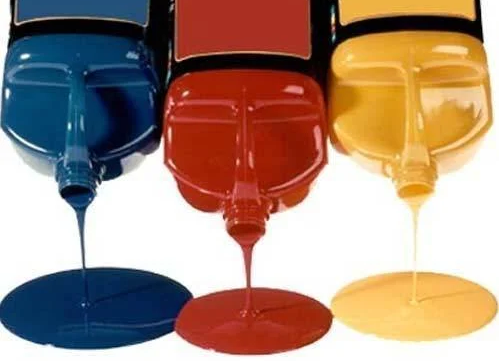
Types of Emulsion Three vividly colored emulsions There are three main categories of emulsions used in screen printing: Presensitized Photopolymer, Diazo Mixed (also known as Dual-Cure), and Hybrid Photopolymer. Each type offers distinct advantages depending on your printing environment and workflow. Utilize a Step Wedge to fine-tune your exposure times.

PRESENSITIZED PHOTOPOLYMER
Presensitized emulsions are ready for immediate use right out of the container, allowing for quick exposure and the ability to capture intricate details. These emulsions exhibit heightened sensitivity to UV light, making them less forgiving but ideal for producing sharp, clean prints when used with appropriate equipment.
A black container of Baselayr Emulsion is placed on a table, with ink supplies visible in the background.
Best suited for:
LED or metal halide exposure units
High-detail and halftone applications
Controlled, light-safe darkroom environments
Recommended options:
Chromaline ChromaBlue: Excellent for plastisol inks and rapid exposure setups
Baselayr Plastisol: Quick exposure with outstanding detail
Baselayr Complete: High solids content, water-resistant, versatile; can be combined with diazo for enhanced durability
Saati Textil PHW Red: One-part SBQ photopolymer, fast exposure, and excellent resistance
Saati Textil PHU-HR Red: Presensitized one-part emulsion that requires no mixing
Chromaline ChromaLime: Optimized for LED, very fast exposure, ideal for plastisol applications and high mesh counts.
For customers seeking even greater detail in their designs, wishing to push the limits of resolution, or needing enhanced initial stencil durability, consider using Baselayr Complete with diazo. The addition of diazo will extend exposure times, improve image resolution, and the longer initial exposure can enhance the stencil’s longevity during printing. Be sure to follow the guidance provided with the diazo packet.
DIAZO MIXED
Diazo emulsions need to be mixed prior to use and have a slower exposure time, which makes them more forgiving. They are ideal for newcomers and printers operating in less-than-ideal conditions. Typically, they are more cost-effective and offer solid durability for a variety of ink types.
A person is pouring emulsion into a scoop coater.
Best suited for:
Shops utilizing fluorescent exposure or natural sunlight
Newcomers and hobbyists
Cost-conscious workflows
Recommended:
Chromaline CP Tex: Durable with diazo mixing, water-resistant for both water-based and discharge inks.
Baselayr Long Lasting: Dual-cure with diazo mixing, offers forgiving exposure latitude and excellent durability.
HYBRID PHOTOPOLYMER
Hybrid photopolymer emulsions integrate advanced photopolymer technology for quicker exposure times, exceptional resolution, and robust durability. Many of these emulsions are compatible with LED exposure systems and perform well with plastisol, water-based, and discharge inks.
Chromaline Hydro-X Red: A highly resistant, LED-optimized hybrid suitable for UV, solvent, and water-based inks; presensitized and quick to expose.
Baselayr Complete: Although not a hybrid photopolymer, it is a versatile one-part emulsion that can be combined with diazo to enhance durability and compatibility across a broader range of inks and exposure systems.

EXPOSURE UNIT MATCHING
A screen printing frame featuring 'BASELAYR' branding on an exposure unit.
Fluorescent Tube: Opt for fast-exposing emulsions.
ChromaBlue
Chromalime
Baselayr Complete
LED, CTS, or LTS: Choose hybrid or versatile emulsions.
Hydro-X Red
Baselayr Complete
Baselayr Long Lasting (when diazo mixed, expect longer exposure times)
Saati Textil PHW Red
Metal Halide: Any emulsion can be used, but durable options are preferred.
CP Tex
Hydro-X Red
Baselayr Long Lasting
Saati PHU-HR Red
Sunlight: Use fast-exposing emulsions.
ChromaBlue
Baselayr Plastisol
Baselayr Complete
EXPERIENCE LEVELS
Beginners: Look for forgiving emulsions that can handle imperfect exposure conditions.
Consider Chromaline CP Tex or Baselayr Long Lasting.
If you prefer a one-part, fast option for LED, try Chromaline Hydro-X Red.
Intermediate: Explore dual-cure options or presensitized photopolymers to find a balance between speed and durability.
Water-based or discharge focus: Chromaline CP Tex or Baselayr Complete or Saati PHW Red for thick stencils and high-density effects.
For plastisol production and intricate mesh details: ChromaBlue, ChromaLime, or Baselayr Plastisol. When seeking LED, CTS, or LTS speed with robust resistance: Hydro-X Red.
For enhanced durability, consider mixing in Baselayr Long Lasting. Advanced: Customize the emulsion to suit each job’s ink system and exposure parameters. Incorporate diazo into Baselayr Complete when you require improved resolution and stencil longevity.
For maximum durability in UV or solvent applications: Baselayr Long Lasting or Saati PHU-HR Red. For water-based or discharge inks on extended runs: Chromaline CP Tex or Baselayr Complete with diazo.
For ultra-fine detail and halftones: ChromaBlue or Baselayr Complete with diazo.
For rapid LED processing with wide ink compatibility: Hydro-X Red. DARKROOM ENVIRONMENT A person holding a screen printing frame in a workshop filled with supplies. Your workspace is crucial. If your area isn’t light-safe, opt for slower emulsions like Chromaline CP Tex or Baselayr Long Lasting and safeguard your screen during washout. Optimal conditions: 60 to 80°F, 30 to 40% humidity, and yellow safe light. FINAL THOUGHTS There is no one-size-fits-all emulsion. Instead, there is an ideal emulsion tailored to your print job, setup, and skill level. Use this guide, revisit it as you develop, and select your emulsion with assurance. Explore All Emulsions and discover the perfect fit for your darkroom today.

FAQ:
1. As a beginner using water-based inks, what type of screen printing emulsion should I choose?
You have two main options available. The first option is a photopolymer emulsion, while the second is a dual-cure emulsion. Photopolymers are pre-sensitized and do not require any mixing, making them convenient as they can be used directly from the container. However, they are very sensitive to UV light, so it's essential to work in a darkroom with no UV exposure when handling this type of emulsion. The second option is the dual-cure emulsion. This diazo emulsion is not pre-sensitized, meaning you need to add a photo-sensitive additive for it to expose your screens. Dual-cure emulsions can be exposed to UV light while still wet without curing, and while it’s not the best practice, you can typically coat your screens under regular lighting. For those new to screen printing, I recommend using a photopolymer emulsion since it exposes more quickly than the dual-cure type and also performs well with weaker light sources. If you are working with water-based inks, make sure to select a photopolymer emulsion specifically designed for them, as standard emulsions are generally formulated for plastisol inks.
2. Is it possible to apply emulsion to just one side of the screen?
Unless you are producing a large number of prints (over 100), you can manage by coating only one side (the ink side). As long as you have properly prepared the screen—cleaning, de-hazing, degreasing, etc.—and your exposure times are accurate, you should not encounter any issues.
3. How long should I allow my coated screen to dry?
Most manufacturers recommend allowing a full 24 hours for the screen to dry completely. However, I know some printers who proceed to exposure after just 30 minutes, thanks to their optimized drying setups which include:
A dehumidifier (this can be skipped if your environment is already dry)
Gentle heat (but not excessive)
Adequate air circulation Personally, I keep two fans running continuously in my darkroom. It's important to ensure your workspace is clean, as particles like sand, dust, hair, and dirt can become airborne and settle on wet coated screens, leading to blockages in the emulsion once it cures.
4. Is it essential to use a dark room for coating my screens?
This largely depends on the type of emulsion you are using. If you are using a photopolymer emulsion, then the answer is YES! Photopolymer emulsions are highly sensitive to ultraviolet (UV) light, so unless you are working with a dual-cure emulsion, it's advisable to coat your screens in a dark environment. Many printers choose to work in a room or basement with little to no natural light and use indoor, UV-safe lighting such as fluorescent lamps or yellow bug lights. Alternatively, you can coat your screens at night if you don’t have access to such a space.
5. How can I tell if my screen has been overexposed?
Identifying overexposure is generally more straightforward.
If your image or any section of it fails to wash out properly, this indicates that the emulsion has been exposed to excessive UV light, causing it to harden too much. Reduce your exposure time and continue experimenting.
Why is the emulsion coming off during printing? At first glance, you might think this indicates underexposure, but it could also be due to a compatibility issue between the emulsion and the ink.
If you’re using water-based ink, ensure that you are also using an emulsion formulated for water-based applications. The same goes for plastisol inks.
If everything checks out, the next time you expose a screen and successfully wash it out, consider re-exposing it again (using sunlight, a halogen lamp, etc.) to further harden the screen before printing. Alternatively, you can apply an emulsion hardener to enhance its water resistance.
6. Where is the best place to store emulsion-coated screens? A dark and dry environment is ideal.
A dark room would be the best option. If you don’t have one available, get creative. Some suggestions include using a cupboard, cardboard box, closet, dresser drawer, or wrapping the screens in dark fabric to shield them from UV exposure.
7. Can I extend the shelf life of emulsion by refrigerating it?
While some manufacturers advise against refrigeration, many printers I know claim it prolongs the emulsion’s longevity.
I believe it depends on the specific type of emulsion and the way it’s stored. Many factors come into play, and refrigeration could potentially cause more harm than good.
From my experience, refrigeration has added about a month to the emulsion’s shelf life, but I haven’t extensively tested this because I usually finish the tub quickly.
I have noticed that it increases the viscosity, making the emulsion more challenging to work with when coating. It’s akin to trying to spread cold butter. To remedy this, I let the emulsion “thaw out” overnight before use.
For more details about emulsion, please contact at +86 15097355251
Tape Adhesives Ultimate Guide
What is Backlit Film and How Backlit Film Works?
Related Article


