
Common Screen Printing Ink Type
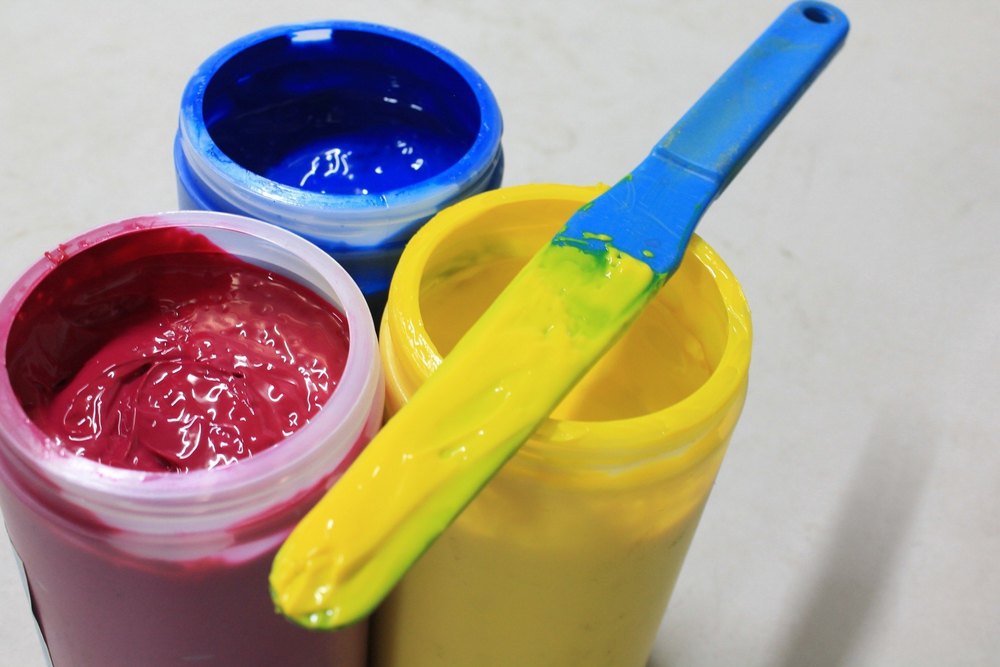
Common Screen Printing Ink type
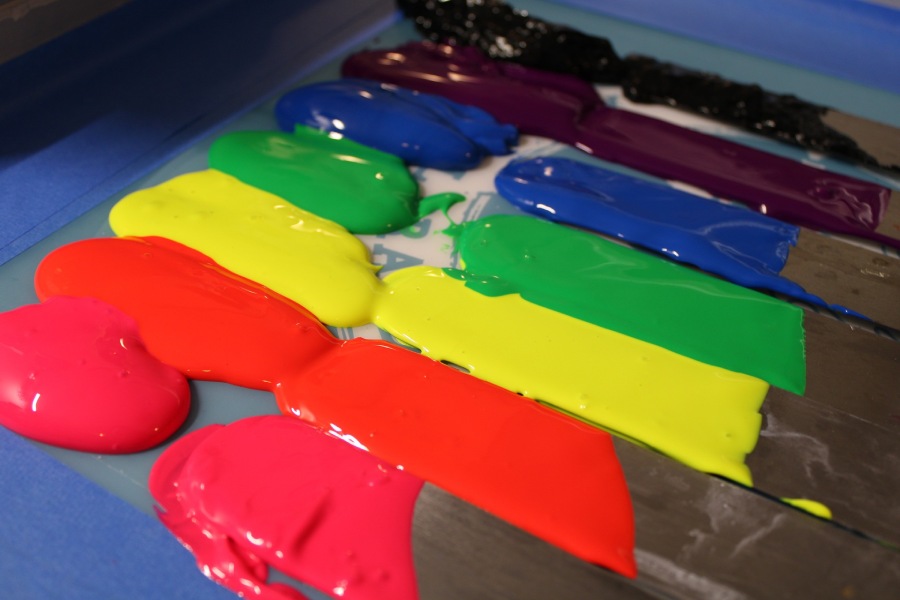
Screen printing inks enhance your designs on various surfaces, transforming each print into a work of art. Select from an extensive range, including plastisol for vivid, bold colors, water-based inks for a soft and breathable finish, and discharge inks for eye-catching prints on dark fabrics.
There are many different kind of screen printing ink according to their characteristics. According to the drying method, screen printing ink can also be divided into ultraviolet drying ink (UV ink), fast-setting ink, self-drying ink, low-temperature thermosetting ink and high-temperature ink. Meanwhile, according to the state of the screen printing ink, it can be divided into colloidal inks, such as water-based, oil-based, resin and starch color paste, etc., and solid inks, such as electrostatic screen printing toner.
In addition, screen printing ink has a wide range of applications and can be categorized according to the different substrates. For example, screen printing inks for paper include oil-based, water-based, high-gloss type, semi-gloss type, etc.; inks for screen printing fabrics are water-based, oil-based and emulsion type, etc.; and inks for plastics are applicable to different materials such as polyvinyl chloride, styrene, polyethylene and acrylic. In addition,screen printing inks for printed circuit boards are characterized by electrical conductivity and corrosion resistance.
Screen printing inks also differ in the way they dry. Volatile drying inks achieve drying through solvent evaporation; UV inks use ultraviolet light to trigger a curing reaction; and oxidative drying inks achieve curing through oxygen in the air. These classifications help us to better understand and choose screen printing inks.In this article, we will introduce several normal screen printing ink for your ref..
-
Volatile drying inks:
It occupies an important place in screen printing because they are widely used and dry quickly. In screen printing process, polymers gradually cured into ink film with the volatilization of solvents. It is worth noting that this drying process is reversible, that is, after the drying of the ink film can be re-dissolved by the solvent.
In the printing process, the ink is first attached to the substrate to form a solvent ink film. Then, the ink film gradually cures as the solvent evaporates. Since the surface of the ink film usually dries faster than the interior, it is sometimes necessary to accelerate the interior drying with the help of means such as blowing air. This type of ink is favored in screen printing because of its ease of use and fast drying characteristics.
-
UV inks:
These inks undergo a photochemical reaction and are fully cured in just a few brief seconds. Increasingly popular in the field of plastics printing, UV inks consist of photopolymerization resins, initiators, colorants and additives, and are usually free of organic solvents.
-
Oxidizing Drying Inks:
These inks contain small molecular weight polymers that are oxidized by air to form a polymer film with the aid of heat, light, or chemical reaction of reactive substances. After printing, heat is usually required to promote hardening.
4. Discharge Ink
Discharge ink is a water-based ink made with an activator that is added to the inks that creates a process where the dyes from the garment are removed, allowing the natural fiber colors to show through. This creates an off-white or bleached out natural canvas-like color, unless a color pigment is added. These pigments can be slightly color matched to meet the color needed in your design (no exact color matching). Bright white colored discharge is very difficult to achieve. Discharge inks work primarily with 100% cotton garments.
The ideal white ink for various fabrics:
For cotton, a standard cotton white ink is recommended. It adheres well to the fibrous structure of cotton, resulting in a vibrant white print.
For poly blends (such as any shirt or fabric featuring a “heather” color), opt for a poly white ink. This type provides the best print quality on blended garments.
When printing on full polyester garments, it's essential to use a low-bleed ink. Failing to do so may cause the dye in the fabric to “bleed” into the ink, resulting in an unwanted pink hue. Avoid this risk!
For nylon, commonly found in jackets and other materials, a nylon white ink is necessary. This ink typically contains a special adhesive to ensure it adheres to the nylon without peeling off. Be sure to strictly follow the curing instructions for your nylon white ink to achieve the best results.
When using screen printing ink, there are some points we need to pay attention to.
- Ink on the printing plate should be avoided to drying and hardening, but on the surface of the substrate should be quickly fixed dry, and ensure good adhesion fastness.
- In order to ensure uniform coating of ink on the printing plate and smooth over the network, it should have a loose, short, thin and slippery characteristics, while the print should be clear, no sticky dirty phenomenon.
- When coated on the printing plate, the viscosity, stickiness and consistency of the ink should be kept stable to ensure the consistency of the quality of the print and the smoothness of the printing process.
- After printing, the ink on the screen printing plate should be easy to clean for reuse.
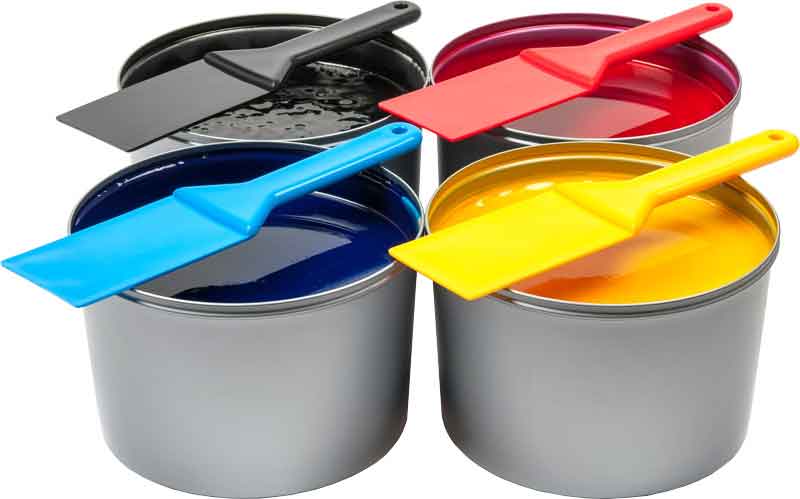
In addition, there are key components such as colorants, linkers and additives that affect screen printing ink performance. Colorants such as pigments and dyes not only give the ink its color, but also affect its hiding power and light resistance. Linker, as the fluid part of the ink, plays the role of dispersing solid substances such as colorants and promoting the role of uniform transfer, while affecting the drying of the ink, adhesion and film formation. And additives are used to improve the printability of the ink, such as defoamer, diluent, etc.. When matching ink, the addition of different color inks should be minimized to obtain a better mixing effect.
In summary, there are many types of screen printing inks, the selection of which should be based on the specific needs and characteristics of the substrate for comprehensive consideration. Each type of ink has its own unique characteristics and application scenarios, providing strong support for the diversity and high quality of screen printing.
FAQ:
Q1: What are the main types of screen printing ink?
-
Plastisol: Most common for garments. Opaque, easy to use, requires heat curing.
-
Water-Based: Soaks into fabric for a soft feel. Best for cotton and light textiles.
-
Solvent-Based: For hard surfaces (plastic, metal, glass). Durable and adhesive.
-
UV-Curable: Cures instantly under UV light. For diverse substrates (plastics, labels).
Q2: How do I choose the right ink?
Choose based on your material:
-
Fabric (T-shirts): Use Plastisol or Water-Based ink.
-
Hard surfaces (mugs, signs): Use Solvent-Based or UV-Curable ink.
Q3: Why is my ink too thick or stringy?
The viscosity is too high.
-
Fix: Add a few drops of the recommended reducer or thinner. Do not over-thin.
Q4: Why won't the ink stick to my material?
Poor adhesion is often due to incorrect ink type or unprepared surface.
-
1) Ensure you're using the correct ink (e.g., plastic ink for polymers).
-
2) Pre-treat/pclean non-porous surfaces before printing.
Q5: How do I make the ink dry/cure?
-
Plastisol: Requires heat (~320°F / 160°C) for a specific time to melt and cure.
-
Water-Based: Requires heat to evaporate the water and fuse the pigment.
-
Solvent-Based: Air dries as the solvents evaporate.
-
UV Ink: Cures instantly under a UV lamp.
Q6: How do I clean up?
-
Plastisol: Scoop excess ink back into the container. Clean screens with press wash/ink degrader.
-
Water-Based: Clean screens with water before the ink dries.
-
Solvent-Based: Use the recommended press wash or solvent to clean screens and tools.
How to choose the right squeegee blade for your screen printing?
PE Blue Tape for Screen Printing Frame
Related Article


