
Screen Printing Anti-fake Technology
Screen Printing Anti-fake Technology
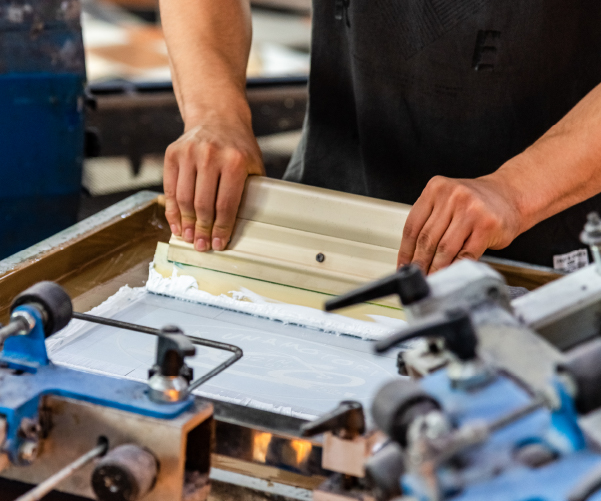
Screen printing, as a traditional printing technology, is widely used in many industrial because its unique printing results and strong adaptability. Recently, with the increasing demand in anti-fake, screen printing technology has been applied in anti-fake area.
The anti-fake theory of screen printing is based on its special printing method and selection of printing materials.
Compared with other printing technology, screen printing can give the substrate material unique visual or tactile characteristics by adjusting thickness of ink layer, adding special material or printing multi layers. These characteristics are difficult to copy by other ordinary printing equipment, thus it can achieve anti-fake result.
In anti-fake application, screen printing often uses the following technique methods. The first method is to use special ink, such as fluorescent, thermochromic or magnetic inks. These inks may appear in one color or state under ordinary light, but under specific conditions, such as ultraviolet irradiation, temperature changes, or the action of a magnetic field, will show a different effect. Such changing characteristics are difficult to reproduce by ordinary scanning or photocopying means, and therefore have certain anti-counterfeiting features.
The second is the realization of miniature text or patterns through fine dot control.
Screen printing can accurately control the amount of ink deposited, so as to print clear text or patterns in a tiny area. These micro-contents usually need to be observed with the help of magnification tools, ordinary printing equipment is difficult to achieve the same accuracy, and therefore can also play a role in anti-counterfeiting.
The third type is to utilize the thick ink characteristics of screen printing to create tactile effects.
By adjusting the mesh number of the screen or the number of printings, a distinctive bumpy feeling can be created on the surface of the print. This tactile feature can not only be perceived by touch, but also unique light and shadow changes can be observed at specific angles, increasing the difficulty of imitation.

In addition to the above technical means, multi-layer composite printing is also a common way of screen printing anti-counterfeiting.
By using different inks or printing processes in different layers, anti-counterfeiting marks with three-dimensional effects can be produced. These logos may present a pattern under ordinary observation, but will reveal hidden information under a specific angle or light.
In practical application, screen printing anti-counterfeiting technology is usually used in combination with other anti-counterfeiting means. For example, it can be combined with digital anti-counterfeiting technology to add searchable code information on the printed materials. It can also be combined with material anti-counterfeiting technology, using printing materials with special properties to enhance the anti-counterfeiting effect. This multiple anti-counterfeiting design concept can further improve the anti-counterfeiting performance of the product.
From the production point of view, the implementation of screen printing anti-counterfeiting technology needs to pay attention to several key points. The first is the stability of process control. Since the anti-counterfeiting effect often depends on precise printing parameters, the production process requires strict control of factors such as screen plate tension, squeegee pressure and ink viscosity to ensure that the anti-counterfeiting characteristics of each batch of products remain consistent.

Next is the choice of materials.
The quality of anti-counterfeiting ink and printing material directly affects the durability and reliability of the anti-counterfeiting effect. It is necessary to select verified suppliers and establish a strict quality inspection process. For anti-counterfeiting technology involving special materials, environmental protection and security also need to be considered.
Screen printing anti-counterfeiting technology also has certain limitations. As it belongs to the category of physical anti-counterfeiting, the identification of anti-counterfeiting features usually requires the use of specific tools or conditions, which may be difficult for ordinary consumers to verify directly. With the progress of copying technology, a single screen printing anti-counterfeiting means may face the risk of being imitated. In practical application, it is necessary to reasonably design the anti-counterfeiting program according to the characteristics of the product and the anti-counterfeiting demand.
In general, screen printing, as a mature printing process, has unique advantages in the field of anti-counterfeiting. Through reasonable technical design and strict process control, it can provide effective anti-counterfeiting protection for products. However, it is also necessary to recognize that anti-counterfeiting is a systematic project, a single printing technology is often difficult to cope with all the challenges, the need to combine with other anti-counterfeiting means to play a role..
For more details, please contact us at +86 15097355251
FAQ:
1. What is anti-counterfeit screen printing?
Anti-counterfeit screen printing involves using specialized inks, printing techniques, and design elements that are extremely difficult or expensive for counterfeiters to replicate. These features are integrated into the packaging, label, or product itself to authenticate its origin and protect the brand.
2. Why is screen printing particularly good for anti-counterfeiting?
Screen printing offers unique advantages for security applications:
-
Versatile Ink Deposition: It can lay down a very thick, tactile layer of ink, which is perfect for features you can feel.
-
Material Compatibility: It can print on almost any surface – plastic, glass, metal, fabric, paper, and uneven substrates.
-
Special Inks: It works exceptionally well with many specialty anti-counterfeit inks that require a thick film or specific curing processes.
-
Opaque Coverage: It can print strong, opaque colors over dark backgrounds, which is useful for hiding covert features.
PE Blue Tape for Screen Printing Frame
Selection of Photographic Emulsion for Screen Printing
Related Article


