
Printing and dyeing solutions
2025-05-23
Printing and dyeing solutions
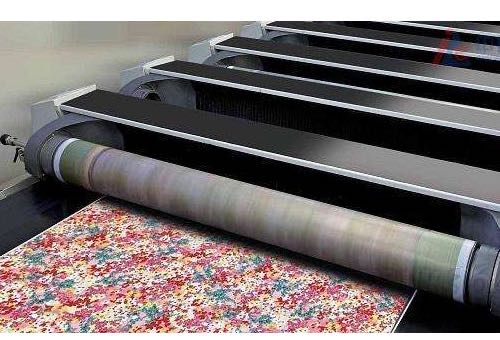
Flexographic printing is a brand-new technology of printed roller printing, which is the expansion of flexographic printing in the field of printing. Flexographic printing frabric surface is tension-controlled instead of guide tape, which makes the woven fabric to be printed more flat, especially the light fabric. It is equipped with special anilox rollers with a variety of specifications, constant and uniform ink volume, fine printingm which has a natural advantage in the printing of fabrics with high requirements for color uniformity such as less color and printing instead of dyeing, and also has the characteristics of water conservation and low post-processing cost.
High speed and efficiency, with a full format printing speed exceeding 120m/min;
Fine printing, printing accuracy can reach 1200DPI;
Low cost, flesographic direct printing, mutiple use of plate rollers, low dyeing and chemical material costs;
Water saving characteristics, which can achieve anhydrous production, short process production, and zero sewage discharge for some types of printing products.
Basic Principles of Flexographic Printing
Under the tension control of the entire machine, the printed fabric is wrapped on the smooth surface of the central large roller, and mutiple printing color groups are arranged around the central large roller in a satellite manner to achieve overprinting or overorinting of four primary colors and spot colors. The printing color group consists of a closed ink chamber, a ceramic anilox roller, and s rubber plate roller. The anilox roller has a constant ink load in the mesh cavity, and the dye is caaurately and controllably transmitted to the fabric under pressure for penetration.
High speed printing
Full format printing speed exceeding 120m/min;
The application of electronoc shaft printing control system allows high-speed printing to cone true.
Special note: The printing speed of flexographic printing is closely related to customer needs and the maturity of printing process, with significantimprovement room in printing speed.

High efficiency printing
The process parameters of printing and proof press machine are seamlessly switched to the complete machine, which reduces machinedebugging time and minimizes waste;
Unique zero speed registration technology, making it easy for instant registration upon startup;
When changing, only the roller sleeve needs to be replaces for the four primary color groups;
Both the plate roller and the anilox roller adopt sleeve type, combined with a quick change mechanism of equipment, making it convenient and fast for change of rollers.
Online quality monitoring with still images.
High quality printing
Seamless plate roller with low circumferential processing error, low axial runout and high overprint accuracy. Constant tension of the printed fabric on the surface of the large roller in the center. Muti-axis servo technology easily realizes +-0.1mm register accuracy;
Ceramic anilox rollers and plate rollers line number configuration is usually 6:1, to achieve accurate dye transfer control;
Flexographic direct printing, 4 primary colors+2 spot colors stacking and color registration process, high thread count screening, wide range of grayscale transition, fine patterns, strong sense of frabric layering;
Reserve special auxiliary color group, can be online fabric pre-treatment.
Specoal note: In theory, flexographic printing can realize high-qulity printing, but it shall combine the fabric structure and customer needs. Moreover, equipment speed and printing quality have no direct correlation.
Water Conservation Features
High utilization rate of printing paste. Water-based printing paste in the inking system in a closed, circular state, non-volatile, recyclable. The cleaning part is only a limited area of the ink path and inking parts, the cleaning water is greatly reduces compared with the traditional printing;
Anilox rollers control the ink, color paste on demand, accurate inking, less/no floating color, water and drying costs are greatly reduced.
The four primary colors can continue to be used when the order is changed, without cleaning;
Waterless production of some categories of printing products, short process production and zero sewage discharge.

Flexographic waterless printing precess chain
Equipment, dyes. plate making and color separation processes in the process chain have been developed and verified, with existing processes available for use by other processes.
The tension of flexographic waterless printing machine is controllable, the clutch pressure can be adjusted, and the operating speed, accuracy, and function of the equipment conform to use needs.
The ink proof press machine has the function of dye distribution verification, including residual ink.
Color separation and plate making: including rubber plate roller sleeve, direct laser engraving machine, prepress process, etc.
Printing and proof press machine can test and develop printing precess, print SO samples, and perform fabric proofing and promotion.
HOW TO CHOOSE A SQUEEGEE
The squeegee using and maintenance instructions
Related Article

This article analyzes the pricing logic of screen printing in the European and American markets, breaking down key cost factors such as plate-making fees, pre-press processing, order volume, color techniques, substrates, and additional service charges. It outlines reference pricing ranges for each stage, providing brands and buyers with valuable guidance for quotation inquiries and budget planning.
How much does screen printing usually cost?

Complete guide for 40*48 cold light exposure machine in screen printing. Learn standard operation steps, parameter setting, troubleshooting, and daily maintenance to improve stencil making accuracy and yield for screen printing production.
The Ultimate Guide of Screen Printing Exposure Unit

This article focuses on selecting screen printing frame stretching machines. It explains key purchasing considerations—including print area, drive system, clamping mechanisms, configuration, and operation and maintenance—to help factories choose the right equipment and ensure plate-making and printing quality from the outset.
How to Choose the Right Screen Printing Stretching Machine?

Home screen‑printing is a fun DIY craft. With supplies including screen frames, photosensitive materials and water‑based ink, you can print custom patterns on T‑shirts, canvas bags, fabric, paper and more. Finished prints are wash‑resistant, crack‑proof and peel‑resistant. Great for personal creation and parent‑child activities. This guide covers full procedures: tool preparation, screen making, ink mixing, printing steps and tool maintenance.
How to Screen Printing at Home?